

If unfortunately diagnosed with cancer, please remember: there is always a turning point beneath the heavy blow of fate.
Life is always full of change and uncertainty. One stretch of road may go smoothly, the next may meet with misfortune. Life is a journey; whether blessed with good or bad fortune, we must walk on bravely, moving ever forward.
Not long ago, the cast of the TV series “Yearning” reunited 30 years after the show first aired. With many actors appearing on stage, those born in the 1970s and 1980s were deeply moved. During the event, veteran actor Li Xuejian spoke a few words—but very slowly, his voice extremely hoarse.
Compared with before, Li Xuejian’s condition aroused concern among many netizens, who asked under the video, “What happened to Teacher Li?”
It turned out that for many years, Li Xuejian had been battling cancer.
In 2001, while filming a TV series, Li noticed a small lump on his neck and a very sore throat. Unexpectedly, a few days later he coughed up blood. He took some anti-inflammatory medicine and went back to filming. A month later, Li was diagnosed with nasopharyngeal cancer. At his worst, he could not even swallow water, and any movement caused dizziness and incessant vomiting.
Considering his condition and possible after-effects, surgery was ultimately not chosen; instead, traditional chemotherapy was adopted. Chemotherapy was extremely painful—Li had to lie still for hours during treatment, and at times the suffering made him want to give up.
Later, when talking about the days fighting the disease and ultimately overcoming cancer, Li felt the key lay in four points:
Eat and sleep well, keep a relaxed mind, cooperate with the doctors, and with the family.
He once said, “I thank my family. During that time, they never let me feel a tense atmosphere. The secret to my recovery was being able to eat and sleep, keeping a calm mind, and cooperating with the treatment.” ①
In a 2012 media interview, Li Xuejian said, “The doctors diagnosed me—cured. They took off the ‘cancer patient’ hat long ago!”
In fact, besides early detection and active treatment, each person’s own “anti-cancer ability” is also very important!
Everyone is born with “anti-cancer ability.”
Even without cancer, protect it well!
Everyone is born with their own “anti-cancer ability”!
Professor He Yumin of Shanghai Jiao Tong University, through analyzing more than 23,000 cancer cases he encountered in over 30 years of practice, found that everyone has proto-oncogenes in their body, and the presence of anti-cancer ability lets most people coexist peacefully with them.
But if one’s anti-cancer ability is largely lost, cancer is likely to result. And some who get cancer can recover, even live with the tumor, precisely because they stimulated their innate anti-cancer ability.
So what exactly is anti-cancer ability?
Professor He Yumin explains that anti-cancer ability refers to a comprehensive capacity of the human body, manifested as the maintenance, adaptation, repair and enhancement of normal functions under a coordinated mind-body state. Likewise, anti-cancer ability also encompasses immunity. It is precisely because of anti-cancer ability that cancer, like hypertension and diabetes, becomes a chronic disease, and even gains the possibility of self-healing. ②
Protect your “anti-cancer ability”—remember these 5 points!
Staying up late, sitting for long periods… too many people are destroying their anti-cancer ability! To protect it well, remember these 5 points!

1. Eat right—one third of cancers are diet-related!
In a 2015 appearance on Gansu TV’s “Ju Jiankang” program, Professor He Yumin of Shanghai Jiao Tong University explained that abundant experimental and clinical observations show about one third of cancers are closely related to dietary and nutritional factors. Arranging a reasonable diet structure and developing good eating habits are important measures for preventing, fighting and recovering from cancer.
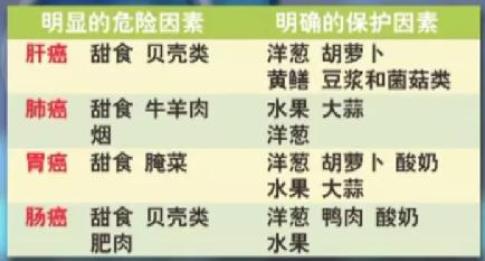
Note: This table is based on research among over a thousand cancer patients. “Sweets” here mainly refer to processed foods; shellfish are hidden risks due to heavy-metal content and other issues.
2. Move well—can lower the incidence of 13 cancers!
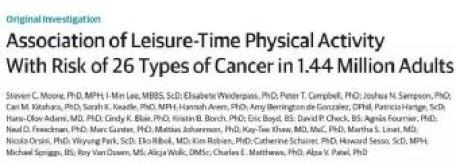
In 2016, researchers at the U.S. National Cancer Institute published a study analyzing data from as many as 1.44 million Europeans and Americans, finding that exercise significantly lowers the incidence of 13 cancers.
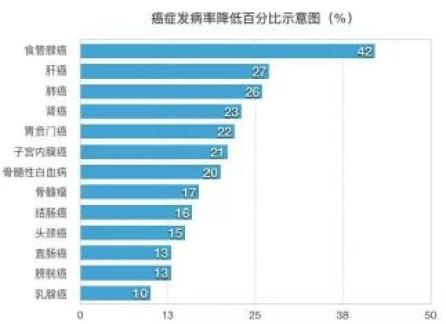
Respectively (percentage reduction in parentheses):
esophageal adenocarcinoma (42%), liver cancer (27%), lung cancer (26%), kidney cancer (23%), gastric cardia cancer (22%), endometrial cancer (21%), myeloid leukemia (20%), myeloma (17%), colon cancer (16%), head and neck cancer (15%), rectal cancer (13%), bladder cancer (13%).
The benefits of exercise are obvious. Esophageal, liver and lung cancers—commonly high in China—can all be reduced in risk through exercise.
Exercise moderately at least three times a week, each session over 20 minutes, ideally until you break a light sweat.
3. Think positively—negative emotions destroy anti-cancer ability!
“I firmly believe one saying: half of health is mental health, and half of disease is mental illness.” This is what Academician Zhong Nanshan once said in an interview.
Research shows that when a person flies into a rage, the stress hormones produced are enough to kill a mouse. Hence “stress hormones” are also called “toxic hormones.” If a person is anxious, angry, tense or depressed for long periods, keeping stress-hormone levels persistently high, the immune system will be suppressed and destroyed, giving cancer an opening!
People need a good mindset and must learn to relieve stress. A rubber band, stretched too long under too much pressure, will suddenly snap one day—so will a person. Some things deserve seriousness; others, learn to let go.
An optimistic mindset keeps the body in its best state. Especially in today’s society, with so much pressure.
4. Sleep well—good sleep nurtures anti-cancer ability!
Sleep is closely tied to immunity. A renowned immunologist, through “self-sleep” experiments, found that good sleep significantly increases the number of two types of lymphocytes in the body. And lymphocytes play an important role in the fight against malignant tumors.
If you don’t get enough sleep, the number of cells responsible for fighting viruses and tumors decreases, and the chance of illness rises. You don’t need a full 8 hours—just wake up feeling refreshed.
5. Get checked—early detection raises cure and survival rates!
The World Health Organization once reported that one third of cancers are preventable, and one third can be cured through early detection, diagnosis and treatment. Therefore, physical examinations are especially important; an annual check-up is recommended.
For example, the early cure rate of gastric cancer itself is as high as 85%–90%; if first discovered at stage II, the cure rate is still 70%–80%; stage III (mid-to-late) about 30%; but stage IV (late), the cure rate is less than 10%.
Take colorectal cancer: Wang Xishan, director of colorectal surgery at the Cancer Hospital of the Chinese Academy of Medical Sciences, said in an interview with Health Times that colorectal cancer typically takes about 10 years to progress from hyperplasia to late stage. The closer to late stage, the lower the survival rate from treatment.
Original title: “Li Xuejian’s 20-year fight against cancer reminds us: everyone is born with ‘anti-cancer ability’—protect it even without cancer!”