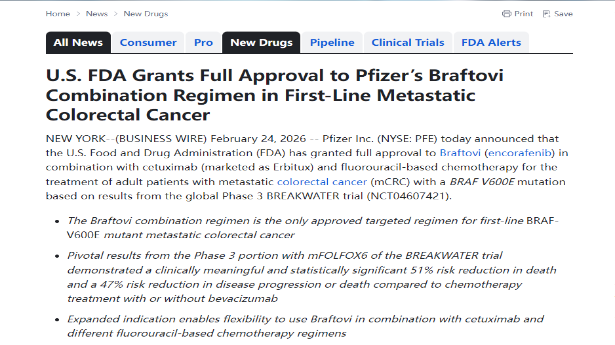
On February 11, 2026, Merck & Co., Inc. announced that the U.S. Food and Drug Administration (FDA) has approved Keytruda (pembrolizumab) in combination with Keytruda Qlex (pembrolizumab and recombinant human hyaluronidase α-pmph) plus paclitaxel, with or without bevacizumab, for the treatment of adult patients with PD-L1-positive (Combined Positive Score [CPS] ≥ 1) platinum-resistant epithelial ovarian, fallopian tube, or primary peritoneal cancer, as confirmed by an FDA-approved test, who have received 1–2 prior lines of systemic therapy.
Keytruda and Keytruda Qlex are the first and only PD-1 inhibitors approved globally for adult patients with PD-L1-positive platinum-resistant epithelial ovarian, fallopian tube, or primary peritoneal cancer.
Basis for This Approval
This approval is based on the Phase 3 KEYNOTE-B96 (ENGOT-ov65) clinical trial: compared with placebo plus paclitaxel ± bevacizumab, the Keytruda combination regimen reduced the risk of disease progression or death by 28% and the risk of death by 24%. The relevant data were presented at the European Society for Medical Oncology (ESMO) Congress 2025.
About the KEYNOTE-B96/ENGOT-ov65 Study
KEYNOTE-B96 (ENGOT-ov65) is a multicenter, randomized, double-blind, placebo-controlled Phase 3 study sponsored by Merck and conducted in collaboration with the European Network of Gynaecological Oncological Trial Groups (ENGOT).
Keytruda was administered continuously until disease progression, unacceptable toxicity, or a maximum treatment period of 24 months. Treatment could be continued beyond RECIST-defined progression if patients remained clinically stable and the investigator confirmed clinical benefit. Tumor assessments were performed every 9 weeks for the first year, and every 12 weeks thereafter.
About Platinum-Resistant Ovarian Cancer
Ovarian cancer most commonly arises from the fallopian tubes or ovaries. As of 2022, ovarian cancer was the 8th most common malignant tumor and the 8th leading cause of cancer-related death among women worldwide.
In the United States, an estimated 21,010 new cases and 12,450 deaths from ovarian cancer are expected in 2026.
More than 80% of patients experience disease progression after standard platinum-based chemotherapy.
Approximately 25% of patients develop resistance within 6 months of first-line platinum-based chemotherapy, defined as primary platinum-resistant ovarian cancer.
Patients with this disease subtype have an extremely poor prognosis, with very limited approved treatment options available.
About Keytruda (Pembrolizumab) Injection 100 mg
Keytruda is an anti-programmed death receptor-1 (PD-1) immunotherapy that acts by enhancing the immune system’s ability to identify and attack tumor cells.
As a humanized monoclonal antibody, Keytruda blocks the binding of PD-1 to its ligands PD-L1 and PD-L2, activating T lymphocytes to target both tumor cells and normal cells.
Merck maintains the world’s largest immuno-oncology clinical research program, with more than 1,600 clinical trials investigating Keytruda across multiple tumor types and treatment settings. The program aims to define Keytruda’s role in various cancers and identify biomarkers that predict patient benefit.
About Keytruda Qlex (Pembrolizumab and Recombinant Human Hyaluronidase α-pmph) Subcutaneous Injection
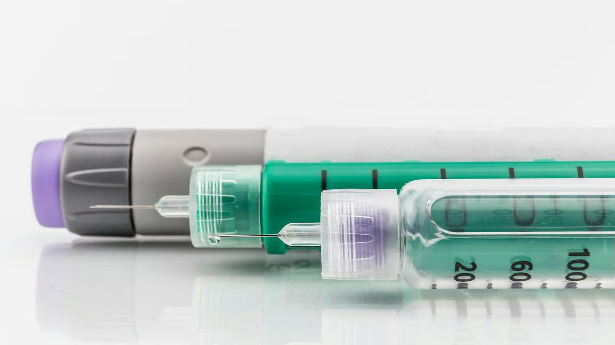
Keytruda Qlex is a fixed-dose combination of pembrolizumab plus recombinant human hyaluronidase α.
- Pembrolizumab: a PD-1-blocking antibody
- Recombinant human hyaluronidase α: enhances drug dispersion and permeability, enabling subcutaneous administration
Dosage and Administration
- Route: Subcutaneous injection in the thigh or abdomen (avoiding the 5 cm region around the umbilicus)
- Every 3 weeks: 2.4 mL, administered over 1 minute
- Or every 6 weeks: 4.8 mL, administered over 2 minutes
 WeChat
 WhatsApp