HIGHLIGHTS OF PRESCRIBING INFORMATION
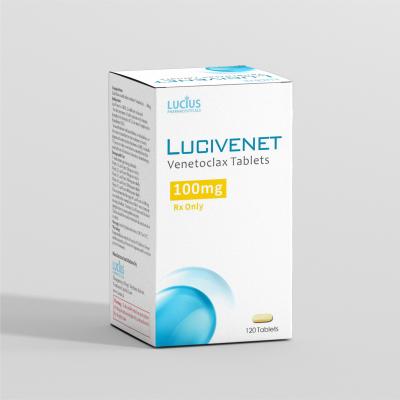
These highlights do not include all the information needed to use LUCIVENET safely and effectively. See full prescribing information for LUCIVENET.
INDICATIONS AND USAGE
LUCIVENET is a BCL-2 inhibitor indicated:
• For the treatment of adult patients with chronic lymphocytic leukemia (CLL) or small lymphocytic lymphoma (SLL).
• In combination with azacitidine, or decitabine, or low-dose cytarabine for the treatment of newly diagnosed acute myeloid leukemia (AML) in adults 75 years or older, or who have comorbidities that preclude use of intensive induction chemotherapy.
DOSAGE AND ADMINISTRATION
• See Full Prescribing Information for recommended LUCIVENET dosages.
• Take LUCIVENET tablets orally once daily with a meal and water. Do not chew, crush, or break tablets.
• Provide prophylaxis for tumor lysis syndrome.
DOSAGE FORMS AND STRENGTHS
Tablets: 100 mg×120 tablets
CONTRAINDICATIONS
Concomitant use with strong CYP3A inhibitors at initiation and during rampup phase in patients with CLL/SLL is contraindicated.
WARNINGS AND PRECAUTIONS
• Tumor Lysis Syndrome (TLS): Anticipate TLS; assess risk in all patients. Premedicate with anti-hyperuricemics and ensure adequate hydration. Employ more intensive measures (intravenous hydration, frequent monitoring, hospitalization) as overall risk increases.
• Neutropenia: Monitor blood counts. Interrupt dosing and resume at same or reduced dose. Consider supportive care measures.
• Infections: Monitor for signs and symptoms of infection and treat promptly. Withhold for Grade 3 and 4 infection until resolution and resume at same or reduced dose.
• Immunization: Do not administer live attenuated vaccines prior to, during, or after treatment with LUCIVENET until B-cell recovery.
• Embryo-Fetal Toxicity: May cause embryo-fetal harm. Advise females of reproductive potential of the potential risk to a fetus and to use effective contraception.
• Treatment of patients with multiple myeloma with LUCIVENET in combination with bortezomib plus dexamethasone is not recommended outside of controlled clinical trials.
ADVERSE REACTIONS
In CLL/SLL, the most common adverse reactions (≥20%) for LUCIVENET when given in combination with obinutuzumab or rituximab or as monotherapy are neutropenia, thrombocytopenia, anemia, diarrhea, nausea, upper respiratory tract infection, cough, musculoskeletal pain, fatigue, and edema.
In AML, the most common adverse reactions (≥30%) in combination with azacitidine or decitabine or low-dose cytarabine are nausea, diarrhea, thrombocytopenia, constipation, neutropenia, febrile neutropenia, fatigue, vomiting, edema, pyrexia, pneumonia, dyspnea, hemorrhage, anemia, rash, abdominal pain, sepsis, musculoskeletal pain, dizziness, cough, oropharyngeal pain, and hypotension.
DRUG INTERACTIONS
• Strong or moderate CYP3A inhibitors or P-gp inhibitors: Adjust dosage of LUCIVENET.
• Strong or moderate CYP3A inducers: Avoid co-administration.
• P-gp substrates: Take at least 6 hours before LUCIVENET.
USE IN SPECIFIC POPULATIONS
• Lactation: Advise women not to breastfeed.
• Hepatic Impairment: Reduce the LUCIVENET dose by 50% in patients with severe hepatic impairment.
Storage
Store at 20℃ to 25℃ (68℉ to 77℉), excursions permitted between 15℃ and 30℃ (59℉ and 86℉) [see USP Controlled Room Temperature]. Protect from moisture.
 WeChat
 WhatsApp