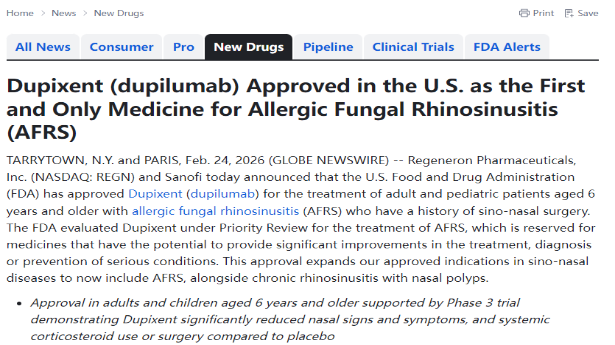
HIGHLIGHTS OF PRESCRIBING INFORMATION
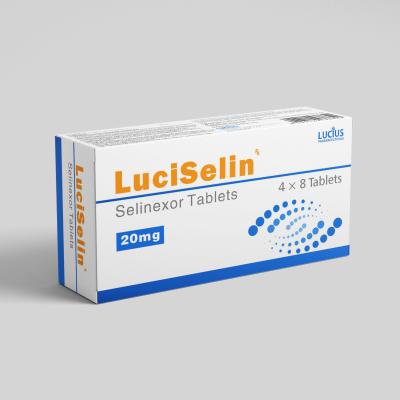
These highlights do not include all the information needed to use LuciSelin safely and effectively. See full prescribing information for LuciSelin.
INDICATIONS AND USAGE
LuciSelin is a nuclear export inhibitor indicated:
• In combination with bortezomib and dexamethasone for the treatment of adult patients with multiple myeloma who have received at least one prior therapy.
• In combination with dexamethasone for the treatment of adult patients with relapsed or refractory multiple myeloma who have received at least four prior therapies and whose disease is refractory to at least two proteasome inhibitors, at least two immunomodulatory agents, and an anti-CD38 monoclonal antibody.
• For the treatment of adult patients with relapsed or refractory diffuse large B-cell lymphoma (DLBCL), not otherwise specified, including DLBCL arising from follicular lymphoma, after at least 2 lines of systemic therapy.
DOSAGE AND ADMINISTRATION
• Multiple Myeloma in Combination with Bortezomib and Dexamethasone (XVd): Recommended dosage of LuciSelin is 100 mg taken orally once weekly in combination with bortezomib and dexamethasone.
• Multiple Myeloma in Combination with Dexamethasone (Xd): Recommended dosage of LuciSelin is 80 mg taken orally on Days 1 and 3 of each week in combination with dexamethasone.
• DLBCL: Recommended dosage of LuciSelin is 60 mg taken orally on Days 1 and 3 of each week.
DOSAGE FORMS AND STRENGTHS
Tablets: 20 mg×32 tablets
CONTRAINDICATIONS
None.
WARNINGS AND PRECAUTIONS
• Thrombocytopenia: Monitor platelet counts throughout treatment. Manage with dose interruption and/or reduction and supportive care.
• Neutropenia: Monitor neutrophil counts throughout treatment. Manage with dose interruption and/or reduction and granulocyte colonystimulating factors.
• Gastrointestinal Toxicity: Nausea, vomiting, diarrhea, anorexia, and weight loss may occur. Provide antiemetic prophylaxis. Manage with dose interruption and/or reduction, antiemetics, and supportive care.
• Hyponatremia: Monitor serum sodium levels throughout treatment. Correct for concurrent hyperglycemia and high serum paraprotein levels. Manage with dose interruption, reduction, or discontinuation, and supportive care.
• Serious Infection: Monitor for infection and treat promptly.
• Neurological Toxicity: Advise patients to refrain from driving and engaging in hazardous occupations or activities until neurological toxicity resolves. Optimize hydration status and concomitant medications to avoid dizziness or mental status changes.
• Embryo-Fetal Toxicity: Can cause fetal harm. Advise females of reproductive potential and males with a female partner of reproductive potential, of the potential risk to a fetus and use of effective contraception.
• Cataract: Cataracts may develop or progress. Treatment of cataracts usually requires surgical removal of the cataract.
ADVERSE REACTIONS
• The most common adverse reactions (≥20%) in patients with multiple myeloma who receive XVd are fatigue, nausea, decreased appetite, diarrhea, peripheral neuropathy, upper respiratory tract infection, weight decreased, cataract, and vomiting. Grade 3-4 laboratory abnormalities (≥10%) are thrombocytopenia, lymphopenia, hypophosphatemia, anemia, hyponatremia, and neutropenia.
• The most common adverse reactions (≥20%) in patients with multiple myeloma who receive Xd are thrombocytopenia, fatigue, nausea, anemia, decreased appetite, weight decreased, diarrhea, vomiting, hyponatremia, neutropenia, leukopenia, constipation, dyspnea, and upper respiratory tract infection.
• The most common adverse reactions (incidence ≥20%) in patients with DLBCL, excluding laboratory abnormalities, are fatigue, nausea, diarrhea, decreased appetite, weight decreased, constipation, vomiting, and pyrexia. Grade 3-4 laboratory abnormalities (≥15%) are thrombocytopenia, lymphopenia, neutropenia, anemia, and hyponatremia.
USE IN SPECIFIC POPULATIONS
Lactation: Advise not to breastfeed.
Storage
Store at 20℃ to 25℃ (68℉ to 77℉), excursions permitted between 15℃ and 30℃ (59℉ and 86℉) [see USP Controlled Room Temperature]. Protect from moisture.
 WeChat
 WhatsApp