HIGHLIGHTS OF PRESCRIBING INFORMATION
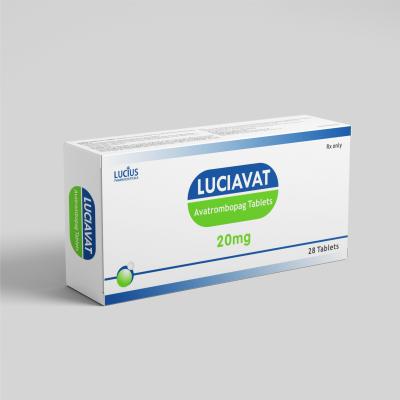
These highlights do not include all the information needed to use LuciAvat safely and effectively. See full prescribing information for LuciAvat.
INDICATIONS AND USAGE
LuciAvat is a thrombopoietin receptor agonist indicated for the treatment of:
• Thrombocytopenia in adult patients with chronic liver disease who are scheduled to undergo a procedure.
• Thrombocytopenia in adult patients with chronic immune thrombocytopenia who have had an insufficient response to a previous treatment.
DOSAGE AND ADMINISTRATION
• Administer LuciAvat with food.
• Chronic Liver Disease: Dose LuciAvat based upon platelet count prior to procedure, orally for 5 days beginning 10 to 13 days before procedure. For platelet count less than 40×109/L, the dose is 60 mg (3 tablets) once daily; for platelet count 40 to less than 50×109/L the dose is 40 mg (2 tablets) once daily.
• Chronic Immune Thrombocytopenia: Initiate LuciAvat at 20 mg (1 tablet) once daily. Adjust the dose or frequency of dosing to maintain platelet count greater than or equal to 50×109/L. Do not exceed 40 mg per day.
DOSAGE FORMS AND STRENGTHS
Tablets: 20 mg×28 tablets
CONTRAINDICATIONS
None.
WARNINGS AND PRECAUTIONS
Thrombotic/Thromboembolic Complications: LuciAvat is a thrombopoietin (TPO) receptor agonist and TPO receptor agonists have been associated with thrombotic and thromboembolic complications in patients with chronic liver disease or chronic immune thrombocytopenia. Monitor platelet counts. Monitor for signs and symptoms of thromboembolic events and institute treatment promptly.
ADVERSE REACTIONS
In patients with chronic liver disease, the most common adverse reactions (≥ 3%) were pyrexia, abdominal pain, nausea, headache, fatigue, and edema peripheral.
In patients with chronic immune thrombocytopenia, the most common adverse reactions (≥ 10%) were headache, fatigue, contusion, epistaxis, upper respiratory tract infection, arthralgia, gingival bleeding, petechiae and nasopharyngitis.
DRUG INTERACTIONS
Moderate or Strong Dual CYP2C9 and CYP3A4 Inducers or Inhibitors: Dose adjustments are recommended for patients with chronic immune thrombocytopenia.
USE IN SPECIFIC POPULATIONS
• Pregnancy: May cause fetal harm.
• Lactation: Advise not to breastfeed.
Storage
Store at 20℃ to 25℃ (68℉ to 77℉), excursions permitted between 15℃ and 30℃ (59℉ and 86℉) [see USP Controlled Room Temperature]. Protect from moisture.
 WeChat
 WhatsApp