HIGHLIGHTS OF PRESCRIBING INFORMATION
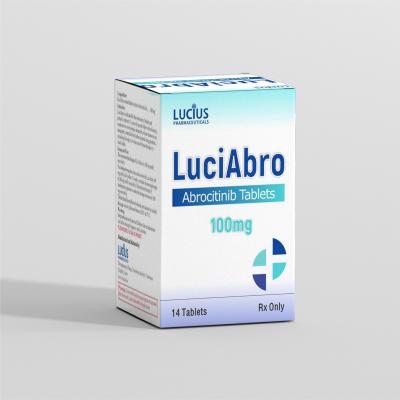
These highlights do not include all the information needed to use LuciAbro safely and effectively. See full prescribing information for LuciAbro.
INDICATIONS AND USAGE
CIBINQO is a Janus kinase (JAK) inhibitor indicated for the treatment of adults and pediatric patients 12 years of age and older with refractory, moderate-to-severe atopic dermatitis whose disease is not adequately controlled with other systemic drug products, including biologics, or when use of those therapies is inadvisable.
Limitation of Use: CIBINQO is not recommended for use in combination with other JAK inhibitors, biologic immunomodulators, or with other immunosuppressants.
DOSAGE AND ADMINISTRATION
· For recommended testing, evaluations and procedures prior to CIBINQO initiation, see Full Prescribing Information.
· Recommended dosage is 100 mg orally once daily.
· 200mg orally once daily is recommended for those patients who are not responding to 100 mg once daily.
· Moderate renal impairment: 50 mg once daily or 100 mg once daily for those patients who are not responding to 50 mg once daily.
· CYP2C19 poor metabolizer: 50 mg once daily or 100 mg once daily for those patients who are not responding to 50 mg once daily.
· For dosage modifications for certain adverse reactions, see Full Prescribing Information.
DOSAGE FORMS AND STRENGTHS
Tablets: 100 mg×14 tablets
CONTRAINDICATIONS
Antiplatelet therapies except for low-dose aspirin (≤81 mg daily), during the first 3 months of treatment.
WARNINGS AND PRECAUTIONS
· Laboratory Abnormalities: Laboratory monitoring is recommended due to potential changes in platelets, lymphocytes, and lipids.
· Immunizations: Avoid use of live vaccines prior to, during, and immediately after CIBINQO treatment.
ADVERSE REACTIONS
Most common adverse reactions (≥1%) in subjects receiving 100 mg and 200 mg include: nasopharyngitis, nausea, headache, herpes simplex, increased blood creatine phosphokinase, dizziness, urinary tract infection, fatigue, acne, vomiting, oropharyngeal pain, influenza, gastroenteritis.
Most common adverse reactions (≥1%) in subjects receiving either 100 mg or 200 mg also include: impetigo, hypertension, contact dermatitis, upper abdominal pain, abdominal discomfort, herpes zoster, and thrombocytopenia.
DRUG INTERACTIONS
· Strong inhibitors of CYP2C19: The recommended dose is 50 mg once daily or 100 mg once daily for those patients who are not responding to 50 mg once daily.
· Moderate to strong inhibitors of both CYP2C19 and CYP2C9, or strong CYP2C19 or CYP2C9 inducers: Avoid concomitant use.
· P-gp substrate where small concentration changes may lead to serious or life-threatening toxicities: Monitor or titrate dosage of P-gp substrate.
USE IN SPECIFIC POPULATIONS
· Lactation: Breastfeeding not recommended.
· Renal Impairment: Avoid use in patients with severe renal impairment or end-stage renal disease.
· Hepatic Impairment: Avoid use in patients with severe hepatic impairment.
Storage
Store at 20℃ to 25℃ (68℉ to 77℉), excursions permitted between 15℃ and 30℃ (59℉ and 86℉) [see USP Controlled Room Temperature]. Protect from moisture.
 WeChat
 WhatsApp