HIGHLIGHTS OF PRESCRIBING INFORMATION
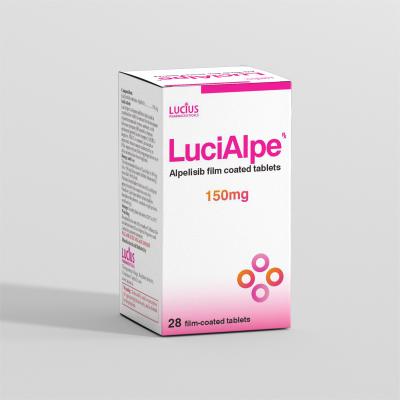
These highlights do not include all the information needed to use LuciAlpe safely and effectively. See full prescribing information for LuciAlpe.
INDICATIONS AND USAGE
LuciAlpe is a kinase inhibitor indicated in combination with fulvestrant for the treatment of postmenopausal women, and men, with hormone receptor (HR) positive, human epidermal growth factor receptor 2 (HER2)-negative, PIK3CA-mutated, advanced or metastatic breast cancer as detected by an FDA-approved test following progression on or after an endocrine-based regimen.
DOSAGE AND ADMINISTRATION
• Recommended Dose: 300 mg (two 150 mg tablets) taken orally once daily with food.
• For adverse reactions, consider dose interruption, dose reduction, or discontinuation.
DOSAGE FORMS AND STRENGTHS
Tablets: 150 mg×28 tablets
CONTRAINDICATIONS
Severe hypersensitivity to LuciAlpe or to any of its components.
WARNINGS AND PRECAUTIONS
• Severe Hypersensitivity: Permanently discontinue LuciAlpe. Promptly initiate appropriate treatment.
• Severe Cutaneous Adverse Reactions (SCARs): LuciAlpe can cause SCARs, including Stevens-Johnson syndrome (SJS), erythema multiforme (EM), toxic epidermal necrolysis (TEN), and drug reaction with eosinophilia and systemic symptoms (DRESS). Interrupt LuciAlpe for signs or symptoms of SCARs. Permanently discontinue LuciAlpe if SCARs are confirmed.
• Hyperglycemia: LuciAlpe can cause severe hyperglycemia, in some cases associated with hyperglycemic hyperosmolar non-ketotic syndrome (HHNKS) or ketoacidosis. The safety of LuciAlpe in patients with Type 1 or uncontrolled Type 2 diabetes has not been established. Before initiating treatment with LuciAlpe, test fasting plasma glucose (FPG), HbA1c, and optimize blood glucose. After initiating treatment, monitor periodically. Initiate or optimize anti-hyperglycemic medications as clinically indicated. Interrupt, reduce dose, or discontinue LuciAlpe if severe hyperglycemia occurs.
• Pneumonitis: LuciAlpe can cause severe pneumonitis and interstitial lung disease. Monitor for clinical symptoms or radiological changes. Interrupt or discontinue LuciAlpe if severe pneumonitis occurs.
• Diarrhea or Colitis: LuciAlpe causes diarrhea in most patients and may be severe, resulting in dehydration and acute kidney injury. Advise patients to start antidiarrheal treatment, increase oral fluids, and notify their healthcare provider if diarrhea occurs.
Colitis has been reported in patients treated with LuciAlpe. Monitor for diarrhea and additional symptoms of colitis, including abdominal pain and mucus or blood in stool.
Interrupt, reduce dose, or discontinue LuciAlpe if severe diarrhea or colitis occurs. Patients with colitis may require additional treatment, such as enteric-acting and/or systemic steroids.
• Embryo-Fetal Toxicity: LuciAlpe can cause fetal harm. Advise patients of potential risk to a fetus and to use effective contraception.
Refer to the Full Prescribing Information of fulvestrant for pregnancy and contraception information.
ADVERSE REACTIONS
Most common adverse reactions, including laboratory abnormalities (all Grades, incidence ≥ 20%) were glucose increased, creatinine increased, diarrhea, rash, lymphocyte count decreased, gamma-glutamyl transferase (GGT) increased, nausea, alanine aminotransferase (ALT) increased, fatigue, hemoglobin decreased, lipase increased, decreased appetite, stomatitis, vomiting, weight decreased, calcium decreased, glucose decreased, activated partial thromboplastin time (aPTT) prolonged, and alopecia.
DRUG INTERACTIONS
• CYP3A4 Inducers: Avoid coadministration of LuciAlpe with a strong CYP3A4 inducer. Consider an alternative concomitant drug with no or minimal potential to induce CYP3A4.
• Breast Cancer Resistance Protein (BCRP) Inhibitors: Avoid the use of BCRP inhibitors in patients treated with LuciAlpe. If unable to use alternative drugs, closely monitor for increased adverse reactions.
• CYP2C9 Substrates: Closely monitor when LuciAlpe is coadministered with CYP2C9 substrates where decreases in the plasma concentration of these drugs may reduce activity.
USE IN SPECIFIC POPULATIONS
Lactation: Advise not to breastfeed.
Storage
Store at 20℃ to 25℃ (68℉ to 77℉), excursions permitted between 15℃ and 30℃ (59℉ and 86℉) [see USP Controlled Room Temperature]. Protect from moisture.
 WeChat
 WhatsApp