HIGHLIGHTS OF PRESCRIBING INFORMATION
These highlights do not include all the information needed to use LuciSelume safely and effectively. See full prescribing information for LuciSelume.
INDICATIONS AND USAGE
LuciSelume is a kinase inhibitor indicated for the treatment of pediatric patients 2 years of age and older with neurofibromatosis type 1 (NF1) who have symptomatic, inoperable plexiform neurofibromas (PN).
DOSAGE AND ADMINISTRATION
· The recommended dosage is 25 mg/m2 taken orally twice daily on an empty stomach. Do not consume food 2 hours before each dose or 1 hour after each dose.
· Reduce the recommended dosage to 20 mg/m2 orally twice daily for patients with moderate hepatic impairment (Child-Pugh B). The recommended dosage for use in patients with severe hepatic impairment (Child-Pugh C) has not been established.
DOSAGE FORMS AND STRENGTHS
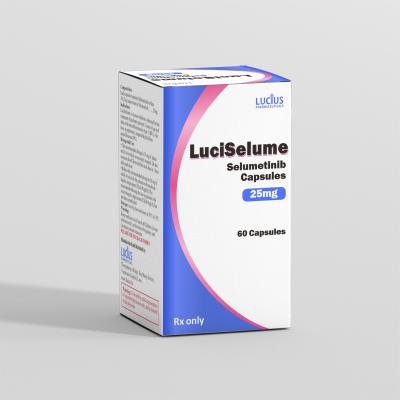
Capsules: 25 mg×60 capsules
CONTRAINDICATIONS
None.
WARNINGS AND PRECAUTIONS
· Cardiomyopathy: Assess ejection fraction prior to initiating treatment, every 3 months during the first year, then every 6 months thereafter and as clinically indicated. Withhold, reduce dose, or permanently discontinue LuciSelume based on severity of adverse reaction.
· Ocular Toxicity: Conduct ophthalmic assessments prior to initiating LuciSelume, at regular intervals during treatment and for new or worsening visual changes. Permanently discontinue LuciSelume for retinal vein occlusion (RVO). Withhold LuciSelume for retinal pigment epithelial detachment (RPED), monitor with optical coherence tomography assessments until resolution, and resume at reduced dose.
· Gastrointestinal Toxicity: Advise patients to start an anti-diarrheal agent immediately after the first episode of loose stool and to increase fluid intake. Withhold, reduce dose, or permanently discontinue LuciSelume based on severity of adverse reaction.
· Skin Toxicity: Monitor for severe skin rashes. Withhold, reduce dose, or permanently discontinue LuciSelume based on severity of adverse reaction.
· Increased Creatinine Phosphokinase (CPK): Increased CPK and rhabdomyolysis can occur. Obtain serum CPK prior to initiating LuciSelume, periodically during treatment, and as clinically indicated. If increased CPK occurs, evaluate for rhabdomyolysis or other causes. Withhold, reduce dose, or permanently discontinue LuciSelume based on severity of adverse reaction.
· Increased Vitamin E Levels and Risk of Bleeding: LuciSelume capsules contain vitamin E and daily intake of vitamin E that exceeds the recommended or safe limits may increase the risk of bleeding. An increased risk of bleeding may occur in patients coadministered vitamin K antagonists or anti-platelet agents.
ADVERSE REACTIONS
Most common adverse reactions (≥ 40%) are: vomiting, rash (all), abdominal pain, diarrhea, nausea, dry skin, fatigue, musculoskeletal pain, pyrexia, acneiform rash, stomatitis, headache, paronychia, and pruritus.
DRUG INTERACTIONS
· Strong or Moderate CYP3A4 Inhibitors or Fluconazole: Avoid coadministration of strong or moderate CYP3A4 inhibitors or fluconazole with LuciSelume. If coadministration with strong or moderate CYP3A4 inhibitors or fluconazole cannot be avoided, reduce the dose of LuciSelume.
· Strong or Moderate CYP3A4 Inducers: Avoid concomitant use of strong and moderate CYP3A4 inducers.
USE IN SPECIFIC POPULATIONS
Lactation: Advise not to breastfeed.
Storage
Store at 20℃ to 25℃ (68℉ to 77℉), excursions permitted between 15℃ and 30℃ (59℉ and 86℉) [see USP Controlled Room Temperature]. Protect from moisture.
 WeChat
 WhatsApp