HIGHLIGHTS OF PRESCRIBING INFORMATION
These highlights do not include all the information needed to use LuciCer safely and effectively. See full prescribing information for LuciCer.
INDICATIONS AND USAGE
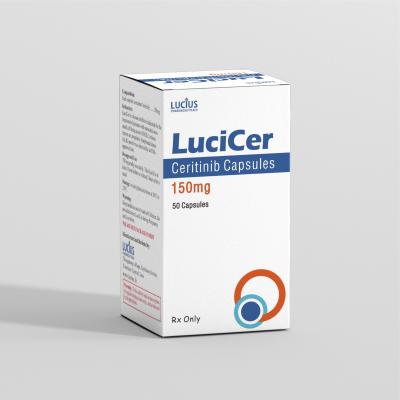
LuciCer is a kinase inhibitor indicated for the treatment of adults with metastatic non-small cell lung cancer (NSCLC) whose tumors are anaplastic lymphoma kinase (ALK)-positive as detected by an FDA-approved test.
DOSAGE AND ADMINISTRATION
Recommended Dosage: 450 mg orally once daily with food.
DOSAGE FORMS AND STRENGTHS
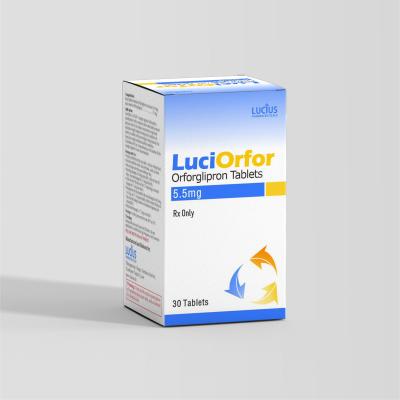
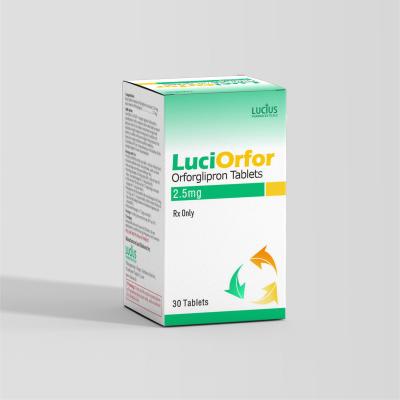
Tablets: 150 mg×50 capsules
CONTRAINDICATIONS
None.
WARNINGS AND PRECAUTIONS
Gastrointestinal Adverse Reactions: LuciCer can cause gastrointestinal adverse reactions. If severe or intolerable, withhold if not responsive to antiemetics or antidiarrheals; upon improvement, resume LuciCer at a reduced dose.
Hepatotoxicity: LuciCer can cause hepatotoxicity. Monitor liver laboratory tests at least monthly. Withhold then dose reduce, or permanently discontinue LuciCer.
Interstitial Lung Disease/Pneumonitis: Occurred in 2.4% of patients. Permanently discontinue LuciCer in patients diagnosed with treatmentrelated interstitial lung disease (ILD)/pneumonitis.
QT Interval Prolongation: LuciCer can cause QTc interval prolongation. Monitor electrocardiograms and electrolytes in patients with congestive heart failure, bradyarrhythmias, electrolyte abnormalities, or those who are taking medications that are known to prolong the QTc interval. Withhold then dose reduce, or permanently discontinue LuciCer.
Hyperglycemia: LuciCer can cause hyperglycemia. Monitor fasting glucose prior to treatment and periodically thereafter. Initiate or optimize anti-hyperglycemic medications as indicated. Withhold, then dose reduce, or permanently discontinue LuciCer.
Bradycardia: LuciCer can cause bradycardia. Monitor heart rate and blood pressure regularly. Withhold, then dose reduce, or permanently discontinue LuciCer.
Pancreatitis: Elevations of lipase and/or amylase and pancreatitis can occur. Monitor lipase and amylase prior to treatment and periodically thereafter as clinically indicated. Withhold, then dose reduce LuciCer.
Embryo-Fetal Toxicity: LuciCer can cause fetal harm. Advise females of reproductive potential of the potential risk to a fetus and to use effective contraception.
ADVERSE REACTIONS
The most common adverse reactions (incidence of ≥ 25%) in patients treated with LuciCer 450 mg with food are diarrhea, nausea, abdominal pain, vomiting, and fatigue; and with LuciCer 750 mg under fasted conditions are diarrhea, nausea, vomiting, fatigue, abdominal pain, decreased appetite, and weight loss.
DRUG INTERACTIONS
CYP3A Inhibitors and Inducers: Avoid concurrent use of LuciCer with strong CYP3A inhibitors or inducers. If concurrent use of a strong CYP3A inhibitor is unavoidable, dose reduce LuciCer.
CYP3A Substrates: Avoid coadministration of LuciCer with sensitive CYP3A substrates. CYP2C9 Substrates: Avoid coadministration of LuciCer with CYP2C9 substrates for which minimal concentration changes may lead to serious toxicities.
USE IN SPECIFIC POPULATIONS
Lactation: Advise not to breastfeed.
Severe Hepatic Impairment: For patients with severe hepatic impairment (Child-Pugh C), dose reduce LuciCer.
Storage
Store at 20℃ to 25℃ (68℉ to 77℉), excursions permitted between 15℃ and 30℃ (59℉ and 86℉) [see USP Controlled Room Temperature]. Protect from moisture.
 WeChat
 WhatsApp