HIGHLIGHTS OF PRESCRIBING INFORMATION
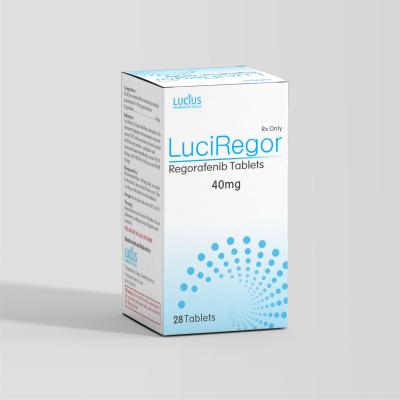
These highlights do not include all the information needed to use LuciRegor safely and effectively. See full prescribing information for LuciRegor.
INDICATIONS AND USAGE
LuciRegor is a kinase inhibitor indicated for the treatment of patients with metastatic colorectal cancer (CRC) who have been previously treated with fluoropyrimidine-, oxaliplatin- and irinotecan-based chemotherapy, an antiVEGF therapy, and, if KRAS wild type, an anti-EGFR therapy.
DOSAGE AND ADMINISTRATION
• Recommended Dose: 160 mg orally, once daily for the first 21 days of each 28-day cycle.
• Take LuciRegor with food (a low-fat breakfast).
DOSAGE FORMS AND STRENGTHS
Tablets: 40 mg×28 tablets
CONTRAINDICATIONS
None.
WARNINGS AND PRECAUTIONS
• Hemorrhage: Permanently discontinue LuciRegor for severe or life-threatening hemorrhage.
• Dermatological toxicity: Interrupt and then reduce or discontinue LuciRegor depending on severity and persistence of dermatologic toxicity.
• Hypertension: Temporarily or permanently discontinue LuciRegor for severe or uncontrolled hypertension.
• Cardiac ischemia and infarction: Withhold LuciRegor for new or acute cardiac ischemia/infarction and resume only after resolution of acute ischemic events.
• Reversible Posterior Leukoencephalopathy Syndrome (RPLS): Discontinue LuciRegor.
• Gastrointestinal perforation or fistulae: Discontinue LuciRegor.
• Wound healing complications: Stop LuciRegor before surgery. Discontinue in patients with wound dehiscence.
• Embryofetal toxicity: Can cause fetal harm. Advise women of potential risk to a fetus.
ADVERSE REACTIONS
The most common adverse reactions (≥30%) are asthenia/fatigue, decreased appetite and food intake, hand-foot skin reaction (HFSR) [palmar-plantar erythrodysesthesia (PPE)], diarrhea, mucositis, weight loss, infection, hypertension, and dysphonia.
DRUG INTERACTIONS
• Strong CYP3A4 inducers: Avoid strong CYP3A4 inducers.
• Strong CYP3A4 inhibitors: Avoid strong CYP3A4 inhibitors.
USE IN SPECIFIC POPULATIONS
Nursing Mothers: Discontinue drug or nursing, taking into consideration the importance of the drug to the mother.
Storage
Store at 20℃ to 25℃ (68℉ to 77℉), excursions permitted between 15℃ and 30℃ (59℉ and 86℉) [see USP Controlled Room Temperature]. Protect from moisture.
 WeChat
 WhatsApp