HIGHLIGHTS OF PRESCRIBING INFORMATION
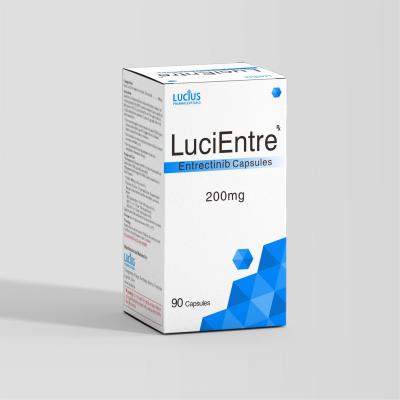
These highlights do not include all the information needed to use LuciEntre safely and effectively. See full prescribing information for LuciEntre.
INDICATIONS AND USAGE
LuciEntre is a kinase inhibitor indicated for the treatment of:
•Adult patients with metastatic non-small cell lung cancer (NSCLC) whose tumors are ROS1-positive.
•Adult and pediatric patients 12 years of age and older with solid tumors that:
o have a neurotrophic tyrosine receptor kinase (NTRK) gene fusion without a known acquired resistance mutation,
o are metastatic or where surgical resection is likely to result in severe morbidity, and
o have progressed following treatment or have no satisfactory alternative therapy.
This indication is approved under accelerated approval based on tumor response rate and durability of response. Continued approval for this indication may be contingent upon verification and description of clinical benefit in the confirmatory trials.
DOSAGE AND ADMINISTRATION
• Select patients for treatment based on the presence of ROS1 rearrangement(s) or NTRK gene fusion.
• Recommended Dosage for ROS1-Positive Non-Small Cell Lung Cancer: 600 mg orally once daily.
• Recommended Dosage for NTRK Gene Fusion-Positive Solid Tumors:
o Adults: 600 mg orally once daily
o Pediatric Patients 12 Years and Older: Recommended dosage is based on body surface area (BSA) as shown below
• BSA greater than 1.50 m2: 600 mg once daily
• BSA 1.11 to 1.50 m2: 500 mg once daily
• BSA 0.91 to 1.10 m2: 400 mg once daily
DOSAGE FORMS AND STRENGTHS
Capsules: 200 mg×90 capsules
CONTRAINDICATIONS
None.
WARNINGS AND PRECAUTIONS
• Congestive Heart Failure: Assess left ventricular ejection fraction prior to initiation of LuciEntre in patients with symptoms or known risk factors for CHF. Monitor patients for clinical signs and symptoms of congestive heart failure (CHF). For patients with myocarditis, with or without a decreased ejection fraction, MRI or cardiac biopsy may be required to make the diagnosis. For new onset or worsening CHF, withhold LuciEntre, reassess LVEF and institute appropriate medical management. Reduce dose or permanently discontinue LuciEntre based on severity of CHF or worsening LVEF.
• Central Nervous System (CNS) Effects: CNS adverse reactions including cognitive impairment, mood disorders, dizziness, and sleep disturbances can occur with LuciEntre. Withhold and then resume at same or reduced dose upon improvement or permanently discontinue
LuciEntre based on severity.
• Skeletal Fractures: LuciEntre increases the risk of fractures. Promptly evaluate patients with signs or symptoms of fractures.
• Hepatotoxicity: Monitor liver tests, including ALT and AST, every 2 weeks during the first month of treatment, then monthly thereafter, and as clinically indicated. Withhold or permanently discontinue LuciEntre based on severity. If withheld, resume LuciEntre at same or reduced dose based on severity.
• Hyperuricemia: Assess serum uric acid levels prior to initiation and periodically during treatment with LuciEntre. Monitor patients for signs and symptoms of hyperuricemia. Initiate treatment with urate lowering medications as clinically indicated and withhold LuciEntre
for signs and symptoms of hyperuricemia. Resume at same or reduced dose upon improvement based on severity.
• QT Interval Prolongation: Monitor patients who have or who are at risk for QTc interval prolongation. Assess QT interval and electrolytes at baseline and periodically during treatment. Withhold and then resume at same or reduced dose, or permanently discontinue LuciEntre based on severity.
• Vision Disorders: Withhold for new visual changes or changes that interfere with activities of daily living until improvement or stabilization. Conduct an ophthalmological evaluation as appropriate. Resume at same or reduced dose upon improvement or stabilization.
• Embryo-Fetal Toxicity: Can cause fetal harm. Advise females of reproductive potential of the potential risk to a fetus and use of effective contraception.
ADVERSE REACTIONS
The most common adverse reactions (≥ 20%) were fatigue, constipation, dysgeusia, edema, dizziness, diarrhea, nausea, dysesthesia, dyspnea, myalgia, cognitive impairment, increased weight, cough, vomiting, pyrexia, arthralgia, and vision disorders
DRUG INTERACTIONS
• Moderate and Strong CYP3A Inhibitors:
o For adult and pediatric patients 12 years and older with a BSA greater than 1.50 m2, reduce the dose of LuciEntre if coadministration of moderate or strong CYP3A inhibitors cannot be avoided.
o For pediatric patients 12 years and older with a BSA less than or equal to 1.50 m2, avoid coadministration with LuciEntre.
• Moderate and Strong CYP3A Inducers: Avoid coadministration with LuciEntre.
USE IN SPECIFIC POPULATIONS
• Lactation: Advise not to breastfeed.
Storage
Store at 20℃ to 25℃ (68℉ to 77℉), excursions permitted between 15℃ and 30℃ (59℉ and 86℉) [see USP Controlled Room Temperature]. Protect from moisture.
 WeChat
 WhatsApp