HIGHLIGHTS OF PRESCRIBING INFORMATION
These highlights do not include all the information needed to use LuciDasa safely and effectively. See full prescribing information for LuciDasa.
INDICATIONS AND USAGE
LuciDasa is a kinase inhibitor indicated for the treatment of
• newly diagnosed adults with Philadelphia chromosome-positive (Ph+) chronic myeloid leukemia (CML) in chronic phase.
• adults with chronic, accelerated, or myeloid or lymphoid blast phase Ph+ CML with resistance or intolerance to prior therapy including imatinib.
• adults with Philadelphia chromosome-positive acute lymphoblastic leukemia (Ph+ ALL) with resistance or intolerance to prior therapy.
• pediatric patients 1 year of age and older with Ph+ CML in chronic phase.
• pediatric patients 1 year of age and older with newly diagnosed Ph+ ALL in combination with chemotherapy.
DOSAGE AND ADMINISTRATION
• Chronic phase CML in adults: 100 mg once daily.
• Accelerated phase CML, myeloid or lymphoid blast phase CML, or Ph+ ALL in adults: 140 mg once daily.
• Chronic phase CML and ALL in pediatrics: starting dose based on body weight.
• Administer orally, with or without a meal. Do not crush, cut, or chew tablets.
DOSAGE FORMS AND STRENGTHS
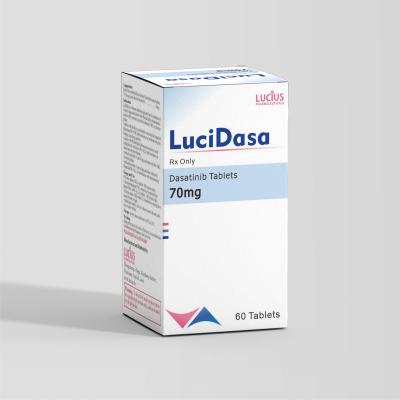
Tablets: 70 mg×60 tablets
CONTRAINDICATIONS
None
WARNINGS AND PRECAUTIONS
• Myelosuppression and Bleeding Events: Severe thrombocytopenia, neutropenia, and anemia may occur. Use caution if used concomitantly with medications that inhibit platelet function or anticoagulants. Monitor complete blood counts regularly. Transfuse and interrupt LuciDasa when indicated.
• Fluid Retention: Fluid retention, sometimes severe, including pleural effusions. Manage with supportive care measures and/or dose modification.
• Cardiovascular Toxicity: Monitor patients for signs or symptoms and treat appropriately.
• Pulmonary Arterial Hypertension (PAH): LuciDasa (dasatinib) may increase the risk of developing PAH which may be reversible on discontinuation. Consider baseline risk and evaluate patients for signs and symptoms of PAH during treatment. Stop LuciDasa if PAH is confirmed.
• QT Prolongation: Use LuciDasa with caution in patients who have or may develop prolongation of the QT interval.
• Severe Dermatologic Reactions: Individual cases of severe mucocutaneous dermatologic reactions have been reported.
• Tumor Lysis Syndrome: Tumor lysis syndrome has been reported. Maintain adequate hydration and correct uric acid levels prior to initiating therapy with LuciDasa.
• Embryo-Fetal Toxicity: Can cause fetal harm. Advise patients of reproductive potential of potential risk to fetus and to use effective contraception.
• Effects on Growth and Development in Pediatric Patients: epiphyses delayed fusion, osteopenia, growth retardation, and gynecomastia have been reported. Monitor bone growth and development in pediatric patients.
• Hepatotoxicity: Assess liver function before initiation of treatment and monthly thereafter or as clinically indicated. Monitor liver function when combined with chemotherapy known to be associated with liver dysfunction.
ADVERSE REACTIONS
Most common adverse reactions (≥15%) in patients receiving LuciDasa as single-agent therapy included myelosuppression, fluid retention events, diarrhea, headache, skin rash, hemorrhage, dyspnea, fatigue, nausea, and musculoskeletal pain.
Most common adverse reactions (≥30%) in pediatric patients receiving LuciDasa in combination with chemotherapy included mucositis, febrile neutropenia, pyrexia, diarrhea, nausea, vomiting, musculoskeletal pain, abdominal pain, cough, headache, rash, fatigue, constipation, arrhythmia, hypertension, edema, infections (bacterial, viral and fungal), hypotension, decreased appetite, hypersensitivity, dyspnea, epistaxis, peripheral neuropathy, and altered state of consciousness.
DRUG INTERACTIONS
• Strong CYP3A4 Inhibitors: Dose reduction may be necessary.
• Strong CYP3A4 Inducers: Dose increase may be necessary.
• Antacids: Avoid simultaneous administration.
• H2 Antagonists and Proton Pump Inhibitors: Avoid coadministration.
USE IN SPECIFIC POPULATIONS
• Lactation: Advise women not to breastfeed.
Storage
Store at 20°C to 25°C (68°F to 77°F), excursions permitted between 15°C and 30°C (59°F and 86°F) [see USP Controlled Room Temperature]. Protect from moisture.
 WeChat
 WhatsApp