HIGHLIGHTS OF PRESCRIBING INFORMATION
These highlights do not include all the information needed to use LuciAbe safely and effectively. See full prescribing information for LuciAbe.
INDICATIONS AND USAGE
LuciAbe is a kinase inhibitor indicated:
• in combination with endocrine therapy (tamoxifen or an aromatase inhibitor) for the adjuvant treatment of adult patients with hormone receptor (HR)-positive, human epidermal growth factor receptor 2 (HER2)-negative, node-positive, early breast cancer at high risk of recurrence.
• in combination with an aromatase inhibitor as initial endocrine based therapy for the treatment of adult patients with hormone receptor (HR)-positive, human epidermal growth factor receptor 2 (HER2)-negative advanced or metastatic breast cancer.
• in combination with fulvestrant for the treatment of adult patients with hormone receptor (HR)-positive, human epidermal growth factor receptor 2 (HER2)-negative advanced or metastatic breast cancer with disease progression following endocrine therapy.
• as monotherapy for the treatment of adult patients with HRpositive, HER2-negative advanced or metastatic breast cancer with disease progression following endocrine therapy and prior chemotherapy in the metastatic setting.
DOSAGE AND ADMINISTRATION
LuciAbe tablets are taken orally with or without food.
• Recommended starting dose in combination with fulvestrant, tamoxifen, or an aromatase inhibitor: 150 mg twice daily.
• Recommended starting dose as monotherapy: 200 mg twice daily.
• Dosing interruption and/or dose reductions may be required based on individual safety and tolerability.
DOSAGE FORMS AND STRENGTHS
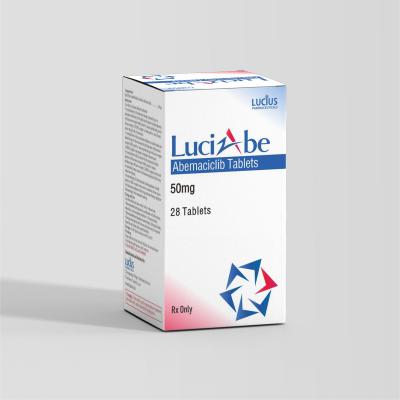
Tablets: 50 mg×28 tablets
CONTRAINDICATIONS
None
WARNINGS AND PRECAUTIONS
• Diarrhea: LuciAbe can cause severe cases of diarrhea, associated with dehydration and infection. Instruct patients at the first sign of loose stools to initiate antidiarrheal therapy, increase oral fluids, and notify their healthcare provider.
• Neutropenia: Monitor complete blood counts prior to the start of LuciAbe therapy, every 2 weeks for the first 2 months, monthly for the next 2 months, and as clinically indicated.
• Interstitial Lung Disease (ILD)/Pneumonitis: Severe and fatal cases of ILD/pneumonitis have been reported. Monitor for clinical symptoms or radiological changes indicative of ILD/pneumonitis. Permanently discontinue LuciAbe in all patients with Grade 3 or 4 ILD or pneumonitis.
• Hepatotoxicity: Increases in serum transaminase levels have been observed. Perform liver function tests (LFTs) before initiating treatment with LuciAbe. Monitor LFTs every two weeks for the first two months, monthly for the next 2 months, and as clinically indicated.
• Venous Thromboembolism: Monitor patients for signs and symptoms of thrombosis and pulmonary embolism and treat as medically appropriate.
• Embryo-Fetal Toxicity: Can cause fetal harm. Advise patients of potential risk to a fetus and to use effective contraception.
ADVERSE REACTIONS
Most common adverse reactions (incidence ≥20%) were diarrhea, neutropenia, nausea, abdominal pain, infections, fatigue, anemia, leukopenia, decreased appetite, vomiting, headache, alopecia, and thrombocytopenia.
DRUG INTERACTIONS
• CYP3A Inhibitors: Avoid concomitant use of ketoconazole. Reduce the LuciAbe dose with concomitant use of other strong and moderate CYP3A inhibitors.
• CYP3A Inducers: Avoid concomitant use of strong and moderate CYP3A inducers.
USE IN SPECIFIC POPULATIONS
Lactation: Advise not to breastfeed.
Storage
Store at 20°C to 25°C (68°F to 77°F), excursions permitted between 15°C and 30°C (59°F and 86°F) [see USP Controlled Room Temperature]. Protect from moisture.
 WeChat
 WhatsApp