HIGHLIGHTS OF PRESCRIBING INFORMATION
These highlights do not include all the information needed to use LuciCob safely and effectively. See full prescribing information for LuciCob.
INDICATIONS AND USAGE
LuciCob is a kinase inhibitor indicated:
For the treatment of adult patients with unresectable or metastatic melanoma with a BRAF V600E or V600K mutation, in combination with vemurafenib.
As a single agent for the treatment of adult patients with histiocytic neoplasms.
DOSAGE AND ADMINISTRATION
Confirm the presence of BRAF V600E or V600K mutation in tumor specimens prior to initiation of LuciCob with vemurafenib for patients with melanoma.
The recommended dose is 60 mg orally once daily for the first 21 days of each 28-day cycle until disease progression or unacceptable toxicity. Take LuciCob with or without food.
DOSAGE FORMS AND STRENGTHS
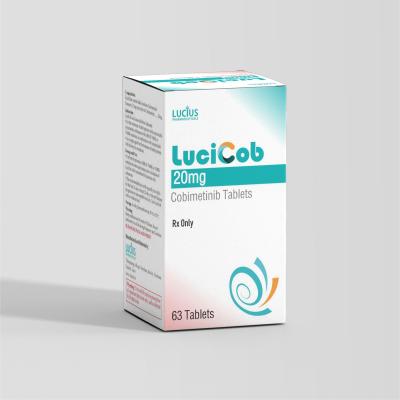
Tablets: 20 mg×63 tablets
CONTRAINDICATIONS
None
WARNINGS AND PRECAUTIONS
New primary malignancies, cutaneous and non-cutaneous: Monitor patients for new malignancies prior to initiation of therapy, while on therapy, and for up to 6 months following the last dose of LuciCob.
Hemorrhage: Major hemorrhagic events can occur with LuciCob. Monitor for signs and symptoms of bleeding.
Cardiomyopathy: The risk of cardiomyopathy is increased in patients receiving LuciCob with vemurafenib compared with vemurafenib as a single agent. The safety of LuciCob has not been established in patients with decreased left ventricular ejection fraction (LVEF). Evaluate LVEF before treatment, after one month of treatment, then every 3 months thereafter during treatment with LuciCob.
Severe Dermatologic Reactions: Monitor for severe skin rashes. Interrupt, reduce, or discontinue LuciCob.
Serous Retinopathy and Retinal Vein Occlusion: Perform an ophthalmological evaluation at regular intervals and for any visual disturbances. Permanently discontinue LuciCob for retinal vein occlusion (RVO).
Hepatotoxicity: Monitor liver laboratory tests during treatment and as clinically indicated.
Rhabdomyolysis: Monitor creatine phosphokinase periodically and as clinically indicated for signs and symptoms of rhabdomyolysis.
Severe Photosensitivity: Advise patients to avoid sun exposure.
Embryo-Fetal Toxicity: Can cause fetal harm. Advise females of reproductive potential of the potential risk to a fetus and to use effective contraception.
ADVERSE REACTIONS
Unresectable or Metastatic Melanoma: Most common adverse reactions for LuciCob (≥20%) are diarrhea, photosensitivity reaction, nausea, pyrexia, and vomiting. The most common (≥5%) Grade 3-4 laboratory abnormalities are increased GGT, increased CPK, hypophosphatemia, increased ALT, lymphopenia, increased AST, increased alkaline phosphatase, hyponatremia.
Histiocytic neoplasms: Most common adverse reactions (≥20%) are acneiform dermatitis, diarrhea, infection, fatigue, nausea, edema, dry skin, maculopapular rash, pruritus, dyspepsia, vomiting, dyspnea and urinary tract infections. The most common (≥5%) grade 3-4 lab abnormalities include:
Hyponatremia, increased blood creatine phosphokinase, hypokalemia, increased blood creatinine, increased AST, hypocalcemia, lymphopenia, leukopenia, anemia.
DRUG INTERACTIONS
Avoid concomitant administration of LuciCob with strong or moderate CYP3A inducers or inhibitors.
USE IN SPECIFIC POPULATIONS
Lactation: Do not breastfeed while taking LuciCob.
Storage
Store at 20C to 25C (68F to 77F), excursions permitted between 15C and 30C (59F and 86F) [see USP Controlled Room Temperature]. Protect from moisture.
 WeChat
 WhatsApp