HIGHLIGHTS OF PRESCRIBING INFORMATION
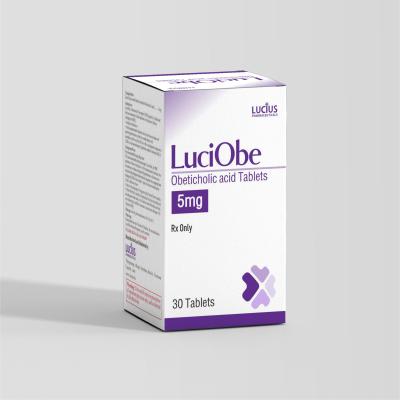
These highlights do not include all the information needed to use LuciObe safely and effectively. See full prescribing information for LuciObe.
INDICATIONS AND USAGE
LuciObe, a farnesoid X receptor (FXR) agonist, is indicated for the treatment of adult patients with primary biliary cholangitis (PBC)
• without cirrhosis or
• with compensated cirrhosis who do not have evidence of portal hypertension, either in combination with ursodeoxycholic acid (UDCA) with an inadequate response to UDCA or as monotherapy in patients unable to tolerate UDCA.
This indication is approved under accelerated approval based on a reduction in alkaline phosphatase (ALP). An improvement in survival or disease-related symptoms has not been established. Continued approval for this indication may be contingent upon verification and description of clinical benefit in confirmatory trials.
DOSAGE AND ADMINISTRATION
Recommended Dosage Regimen
The recommended starting dosage of LuciObe, for PBC patients without cirrhosis or with compensated cirrhosis who do not have evidence of portal hypertension, who have not achieved an adequate biochemical response to an appropriate dosage of UDCA for at least 1 year or who are intolerant to UDCA follows below:
• Start with a dosage of 5 mg once daily for the first 3 months.
• After the first 3 months, for patients who have not achieved an adequate reduction in ALP and/or total bilirubin and who are tolerating LuciObe, increase to a maximum dosage of 10 mg once daily.
Routinely monitor patients during LuciObe treatment for biochemical response, tolerability, and progression of PBC.
Management of Patients with Intolerable Pruritus
• See full prescribing information for management options.
Administration Instructions
• Take with or without food.
• For patients taking bile acid binding resins, take LuciObe at least 4 hours before or 4 hours after taking a bile acid binding resin, or at as great an interval as possible.
DOSAGE FORMS AND STRENGTHS
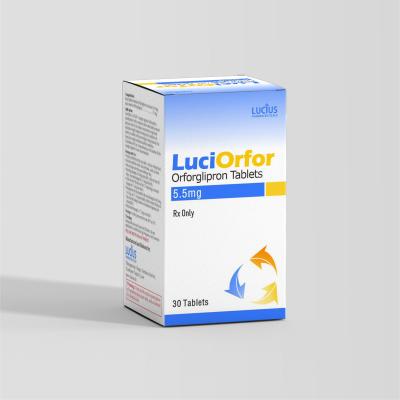
Tablets: 5 mg×30 tablets
CONTRAINDICATIONS
• decompensated cirrhosis (e.g., Child-Pugh Class B or C) or a prior decompensation event.
• compensated cirrhosis with evidence of portal hypertension (e.g., ascites, gastroesophageal varices, persistent thrombocytopenia).
• complete biliary obstruction.
WARNINGS AND PRECAUTIONS
• Hepatic Decompensation and Failure in PBC Patients with Cirrhosis: Routinely monitor patients for progression of PBC, including hepatic adverse reactions, with laboratory and clinical assessments. Closely monitor patients at risk of hepatic decompensation. Permanently discontinue in patients who develop laboratory or clinical evidence of hepatic decompensation; have compensated cirrhosis and develop evidence of portal hypertension; experience clinically significant hepatic adverse reactions; or develop complete biliary obstruction. Interrupt treatment in patients with severe intercurrent illness.
• Severe Pruritus: Management strategies include the addition of bile acid binding resins or antihistamines; LuciObe dosage reduction and/or temporary dosing interruption.
• Reduction in HDL-C: Monitor for changes in serum lipid levels during treatment.
ADVERSE REACTIONS
Most common adverse reactions (≥ 5%) are: pruritus, fatigue, abdominal pain and discomfort, rash, oropharyngeal pain, dizziness, constipation, arthralgia, thyroid function abnormality, and eczema.
DRUG INTERACTIONS
• Warfarin: Potential for decreased INR; monitor INR and adjust the dosage of warfarin, as needed, to maintain the target INR range.
• CYP1A2 Substrates with Narrow Therapeutic Index (e.g., theophylline and tizanidine): Potential for increased exposure to CYP1A2 substrates; monitor drug concentrations of CYP1A2 substrates with narrow therapeutic index.
• Inhibitors of Bile Salt Efflux Pump (e.g., cyclosporine): Avoid use. If concomitant use is necessary, monitor serum transaminases and bilirubin.
Storage
Store at 20°C to 25°C (68°F to 77°F), excursions permitted between 15°C and 30°C (59°F and 86°F) [see USP Controlled Room Temperature]. Protect from moisture.
 WeChat
 WhatsApp