HIGHLIGHTS OF PRESCRIBING INFORMATION
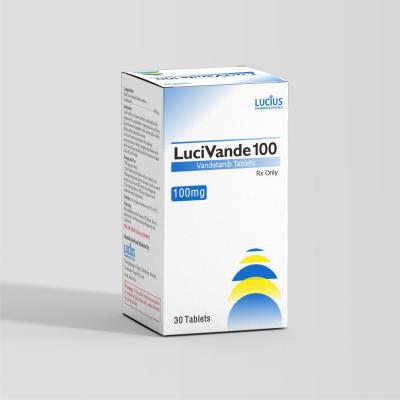
These highlights do not include all the information needed to use LuciVande safely and effectively. See full prescribing information for LuciVande.
INDICATIONS AND USAGE
LuciVande is a kinase inhibitor indicated for the treatment of symptomatic or progressive medullary thyroid cancer in patients with unresectable locally advanced or metastatic disease.
Use LuciVande in patients with indolent, asymptomatic or slowly progressing disease only after careful consideration of the treatment related risks of LuciVande.
DOSAGE AND ADMINISTRATION
•300 mg once daily.
•LuciVande may be taken with or without food.
•Dosage reduction may be necessary in the event of severe toxicities or QTc interval prolongation.
•The starting dose is 200 mg in patients with moderate renal impairment.
DOSAGE FORMS AND STRENGTHS
Tablets: 100 mg×30 tablets/bottle
CONTRAINDICATIONS
Do not use in patients with congenital long QT syndrome.
WARNINGS AND PRECAUTIONS
• Prolonged QT interval, torsades de pointes, and sudden death: Monitor electro cardiograms and levels of serum potassium, calcium, magnesium and TSH. Reduce LuciVande dose as appropriate.
• Severe skin reactions, including toxic epidermal necrolysis and Stevens-Johnson syndrome, some fatal. Discontinue LuciVande for severe skin reactions.
• Interstitial lung disease (ILD), including fatalities: investigate unexplained nonspecific respiratory signs and symptoms. Discontinue LuciVande for confirmed ILD.
• Ischemic cerebrovascular events, hemorrhage, heart failure, diarrhea, hypertension, and reversible posterior leukoencephalopathy syndrome: Discontinue or interrupt LuciVande.
• Impaired wound healing: Withhold for at least 1 month prior to elective surgery. Do not administer LuciVande for at least 2 weeks following major surgery and until adequate wound healing. The safety of resumption of treatment with LuciVande after resolution of wound healing complications has not been established.
• Embryo-fetal toxicity: Can cause fetal harm. Advise women of reproductive potential of the potential risk to a fetus and to use effective contraception during treatment with LuciVande and for 4 months following the last dose.
ADVERSE REACTIONS
The most common adverse drug reactions (>20%) seen with LuciVande and with a between-arm difference of ≥5% have been diarrhea/colitis, rash, acneiform dermatitis, hypertension, nausea, headache, upper respiratory tract infections, decreased appetite and abdominal pain.
DRUG INTERACTIONS
• Avoid the use of strong CYP3A4 inducers because they may decrease LuciVande exposure.
• Avoid the use of agents that prolong the QT interval.
Storage
Store at 20°C to 25°C (68°F to 77°F), excursions permitted between 15°C and 30°C (59°F and 86°F) [see USP Controlled Room Temperature]. Protect from moisture.
 WeChat
 WhatsApp