HIGHLIGHTS OF PRESCRIBING INFORMATION
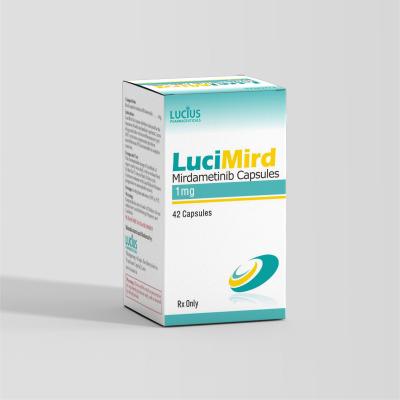
These highlights do not include all the information needed to use LuciMird safely and effectively. See full prescribing information for LuciMird.
INDICATIONS AND USAGE
LuciMird is a kinase inhibitor indicated for the treatment of adult and pediatric patients 2 years of age and older with neurofibromatosis type 1 (NF1) who have symptomatic plexiform neurofibromas (PN) not amenable to complete resection.
DOSAGE AND ADMINISTRATION
The recommended dosage of LuciMird is 2 mg/m2 orally twice daily, with or without food, for the first 21 days of each 28-day cycle. Continue treatment with LuciMird until disease progression or unacceptable toxicity.
DOSAGE FORMS AND STRENGTHS
Capsules: 1 mg×42 capsules
CONTRAINDICATIONS
None
WARNINGS AND PRECAUTIONS
• Ocular Toxicity: Conduct comprehensive ophthalmic assessments prior to initiating LuciMird, at regular intervals during treatment and for new or worsening visual changes or blurred vision. Continue, withhold, reduce the dose, or permanently discontinue LuciMird based on severity.
• Left Ventricular Dysfunction: Assess ejection fraction by echocardiogram prior to initiating LuciMird, every 3 months during the first year, then as clinically indicated thereafter. Withhold, reduce the dose, or permanently discontinue LuciMird based on severity.
• Dermatologic Adverse Reactions: Initiate supportive care at first signs of dermatologic adverse reactions including rash. Withhold, reduce the dose, or permanently discontinue LuciMird based on severity.
• Embryo-Fetal Toxicity: Can cause fetal harm. Advise patients of reproductive potential of the potential risk to a fetus and to use effective contraception.
ADVERSE REACTIONS
Adults:
• The most common adverse reactions (>25%) were rash, diarrhea, nausea, musculoskeletal pain, vomiting, and fatigue.
• The most common Grade 3 or 4 laboratory abnormality (>2%) was increased creatine phosphokinase.
Pediatric patients:
• The most common adverse reactions (>25%) were rash, diarrhea, musculoskeletal pain, abdominal pain, vomiting, headache, paronychia, left ventricular dysfunction, and nausea.
• The most common Grade 3 or 4 laboratory abnormalities (>2%) were decreased neutrophil count and increased creatine phosphokinase.
USE IN SPECIFIC POPULATIONS
• Lactation: Advise not to breastfeed.
• Infertility: May impair fertility in females.
Storage
Store at 20°C to 25°C (68°F to 77°F), excursions permitted between 15°C and 30°C (59°F and 86°F) [see USP Controlled Room Temperature]. Protect from moisture.
 WeChat
 WhatsApp